Dad, Stop Coaching Me: Understanding the Vital Role of the Tennis Parent
From professional tour insights with Mark Knowles to a humbling courtside reality check from an 11-year-old, are we understanding the role of parents in junior player development?

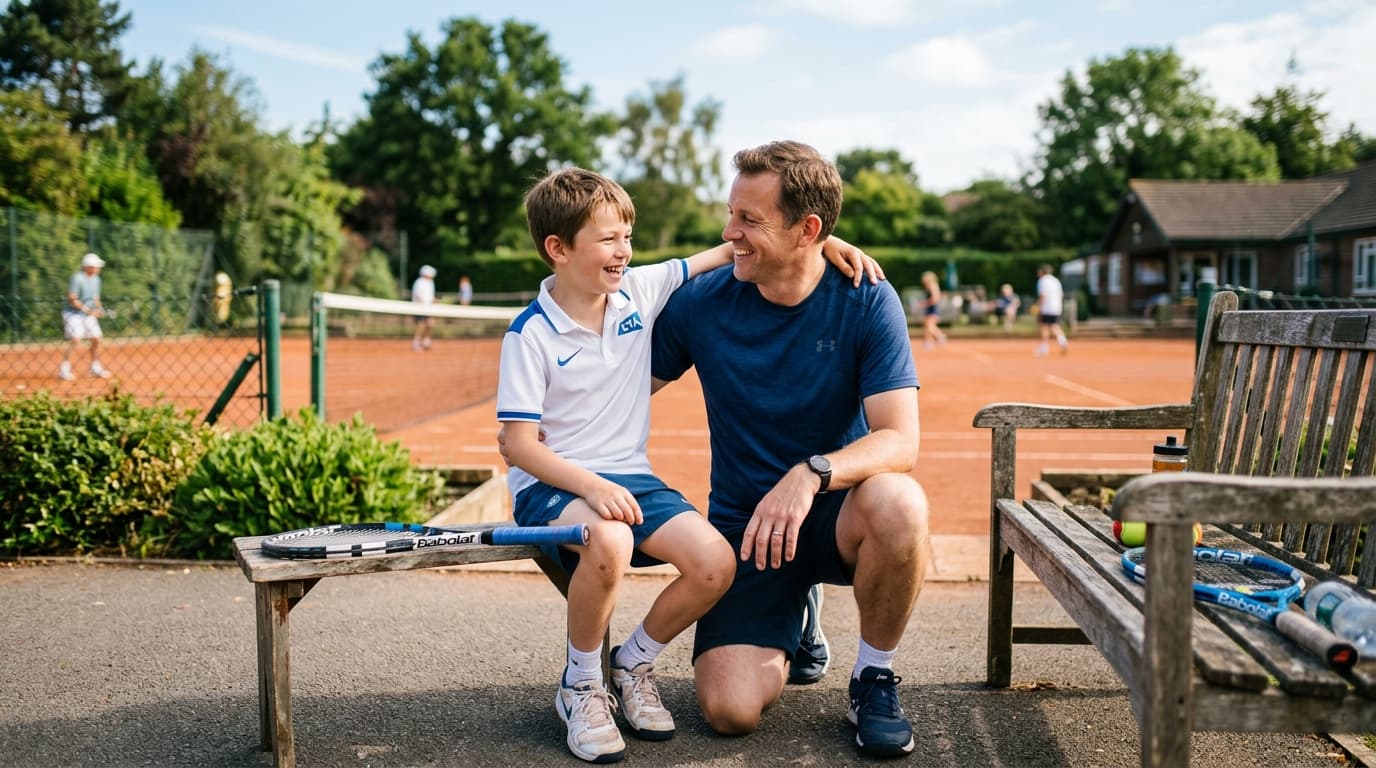
AI Generated. A father and son sharing a smile courtside - capturing the warmth and unconditional support that young players need most.
We all recognise the caricature: the stressed figure pacing behind the chain-link fence, grimacing at missed second serves, furiously scribbling notes, and conducting tense post-match post-mortems in the car on the way home. In a sport played in complete isolation without teammates to share the emotional load, the pressure filtering down from the sidelines has possibly sent countless talented youngsters walking away from the game before their prime.
Unfortunately I've seen this. Hearing the way a Father spoke to his 14 year old son following a coaching session - I couldn't believe the son's resillience but left feeling he shouldn't have to utilise that skill in response to his own Father.
But this is Good News Tennis, if we dwell too long on some of the unwanted scenes then we may miss the positive aspects.
A heartwarming shift is possibly underway. Across grassroots clubs and the professional tour alike, coaches, players, and parents are redefining what healthy support truly looks like.
Instead of treating the sideline as an auxiliary coaching box, the tennis community is celebrating a refreshing truth: a young player does not need their parent to be an amateur tactical guru. They need them to be an unwavering emotional anchor.
A Humbling Lesson
I speak here from genuine, slightly embarrassing personal experience.
As anyone who knows my tennis journey will attest, I took up the sport relatively late in life. My passion for the game comfortably dwarfs my technical ability. Aside from a handful of pointers I have gleaned during my own weekly adult coaching sessions - keep your eye on the ball, bend your knees, and hope for the best - I possess virtually zero credentials to coach anyone in anything.
Naturally, this did not stop me from trying to impart my profound wisdom onto my 11-year-old son.
There I was following a recent practice session with all the self-appointed authority of a Wimbledon finalist saying to my son "I've got an idea on how to help with your grip".
In response I son said something amazing
"Dad, stop coaching me. I've got a coach, I want you to be my Dad."
At first, I froze. But as the words sank in, a wave of warmth and relief washed over me. He was completely, unequivocally right. He did not need a second, hopelessly underqualified coach badgering him about his wrist angle. He needed his dad to cheer his good shots, fetch the stray balls, and buy him a celebratory cold drink on the drive home regardless of the score.
That moment of junior wisdom encapsulated a lesson that many tennis parents spend years trying to learn.
The Mark Knowles Epiphany: Setting the Boundaries
As it turns out, this delicate balance between parental care and technical interference is not confined to municipal public parks. It sits right at the heart of the highest levels of professional tennis.
In a conversation on the Tennis Insider Club podcast hosted by Caroline Garcia and Borja Durán, former ATP doubles World No. 1 and elite coach Mark Knowles shared fascinating reflections on this exact dynamic around the 26-minute mark.
Knowles, who has guided Jessica Pegula through the upper echelons of the WTA tour, spoke openly about the critical role parents play in athlete longevity and mental health. He articulated that young players often struggle to reach their true potential until they establish a healthy, well-defined relationship with their parents on and off the court.
When parents blur the lines - attempting to act as technical instructors, conditioners, and match analysts - they unintentionally introduce anxiety and emotional entanglement. A child's deepest psychological need from their parents is unconditional love and psychological safety. When performance on court becomes entwined with parental approval, the simple joy of hitting a yellow tennis ball disappears.
Host Caroline Garcia knows this reality intimately. During the episode, she opened up about the complexities of having her own father coach her during pivotal stages of her career, discussing how separating parental affection from technical critique is one of the hardest hurdles a tennis family can navigate. Knowles also reflected on how champions like Andy Roddick benefited immensely from healthy parental boundaries - having parents who supported the pursuit passionately without smothering the athlete or attempting to dictate the tennis.
The True Power of the Tennis Parent
What Knowles articulated so brilliantly is that stepping back from coaching does not mean caring less; it means caring better.
A tennis coach is there to refine technique, construct patterns of play, and build physical resilience. But a coach cannot provide what a parent provides:
- Unconditional acceptance: The assurance that win, lose, or double-fault on break point, your worth in the family never fluctuates.
- A sanctuary away from the baseline: Giving children the space to switch off, laugh, and remember that tennis is something they do, not who they are.
- Perspective and patience: Reminding them that development is a marathon filled with plateaus and breakthroughs, not a weekly emergency.
When parents relinquish the clipboard and embrace the role of pure supporter, junior players relax. Their shoulders drop, their decision-making becomes freer, and their innate love for competition returns.
The Best Seat in the House
To every mum, dad, grandparent, and carer driving across the county on cold Saturday mornings, packing water bottles, and shivering on park benches: your role is the most vital one in the sport.
Tennis is hard enough without having to worry whether the ride home will feel like an interrogation. If you are ever tempted to call out a technical tip from the sideline, take a deep breath, smile, and remember the words of my 11-year-old:
They already have a coach. What they truly want, and what will carry them furthest in this sport, is simply for you to be their parent.
About the Author
James Heggs
Later in life tennis adopter. Passion outweighing skill.